
There’s a case I teach in our leadership workshops that always gets the same reaction. A telecom company asked every function whether it got its work right the first time. More than 90% of the people in every function said yes. Then the company asked its customers. Only 65% of them got a working connection on the first try.
The field engineers had cut their install times to hit their order targets, and some left before the customer was connected. The call center got flooded with people whose service didn’t work. Sales was booking orders that were missing information. Every team was hitting its number.
Everyone internally won, but the customer ended up losing.
It shows up everywhere
On Monday I was coaching a technology leader at a large national company, and we spent most of our hour on a version of the same problem. His service desk could be measured on how fast tickets close, and he didn’t want that. A ticket can close fast while the person who called is still stuck. What he wanted was a scoreboard for the customer’s experience: call the person back, ask the questions, stay on until it’s fixed.
He’s looking at what he called an excellence agreement to sit alongside the usual service-level agreement. The service-level agreement says how fast. The excellence agreement says how well.
Why it keeps happening
When each department writes its own targets, it picks the things it can control and count. That’s reasonable. The trouble is that a customer never experiences one department. They experience the handoffs between departments, and in most companies nobody owns those.
In the telecom case, meeting the customer’s need wasn’t in anyone’s individual targets or any function’s targets. The functions weren’t talking to each other, and the scorecards gave them no reason to.
How to fix the scorecard
Put the customer on every scorecard. Every department gets at least one measure that only moves when the customer is better off, even the departments that never talk to a customer.
Pair every speed measure with an outcome measure. Time to close plus whether it stayed fixed. Orders booked plus orders installed without a callback.
Measure the handoffs. Pick the two or three places where work moves between teams and track what happens there. That’s where the customer’s experience breaks.
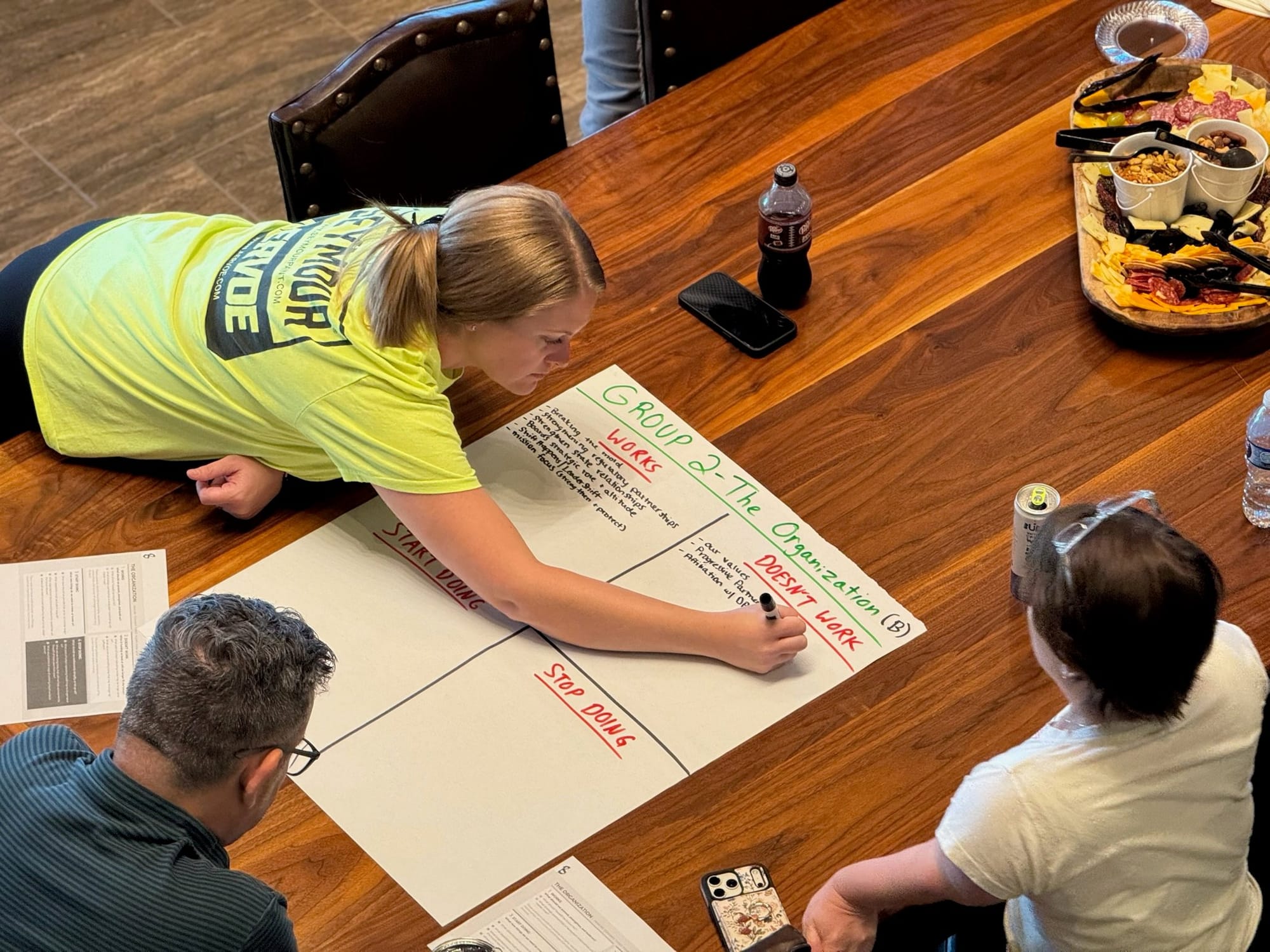
Review the scorecards side by side. Once a quarter, put every department’s targets on one wall as a leadership team. You’ll see in about ten minutes where one team’s win is another team’s problem.
Ask the customer. Before you trust your own first-time-right number, ask the people on the other end what they’d say.
What would your customers say your first-time-right number is?
Frequently asked questions
Why do departments hit their targets while customers are unhappy?
Each function sets targets it can control, like speed or volume. Customers experience the handoffs between functions, which usually aren’t on anyone’s scorecard.
How do you align department scorecards around the customer?
Give every department at least one customer outcome measure, pair speed measures with quality measures, track the handoffs between teams and review all the scorecards together as a leadership team.
What is the difference between a service-level agreement and an excellence agreement?
A service-level agreement sets how fast a team responds. An excellence agreement sets what a good experience looks like for the customer, such as staying with the issue until it’s fixed.
Related service: Team Alignment Workshops