Organizational culture assessment.
Anonymous surveys at every level and confidential interviews that show how your culture operates today compared with what your strategy requires, delivered as a playbook your leaders can execute.
An Everest Organizational Culture Assessment is a measured, human read on how your culture operates today compared with the culture your strategy requires, built from anonymous surveys at every level of the organization and confidential one-on-one interviews, and delivered to your executive team as a playbook they can execute.
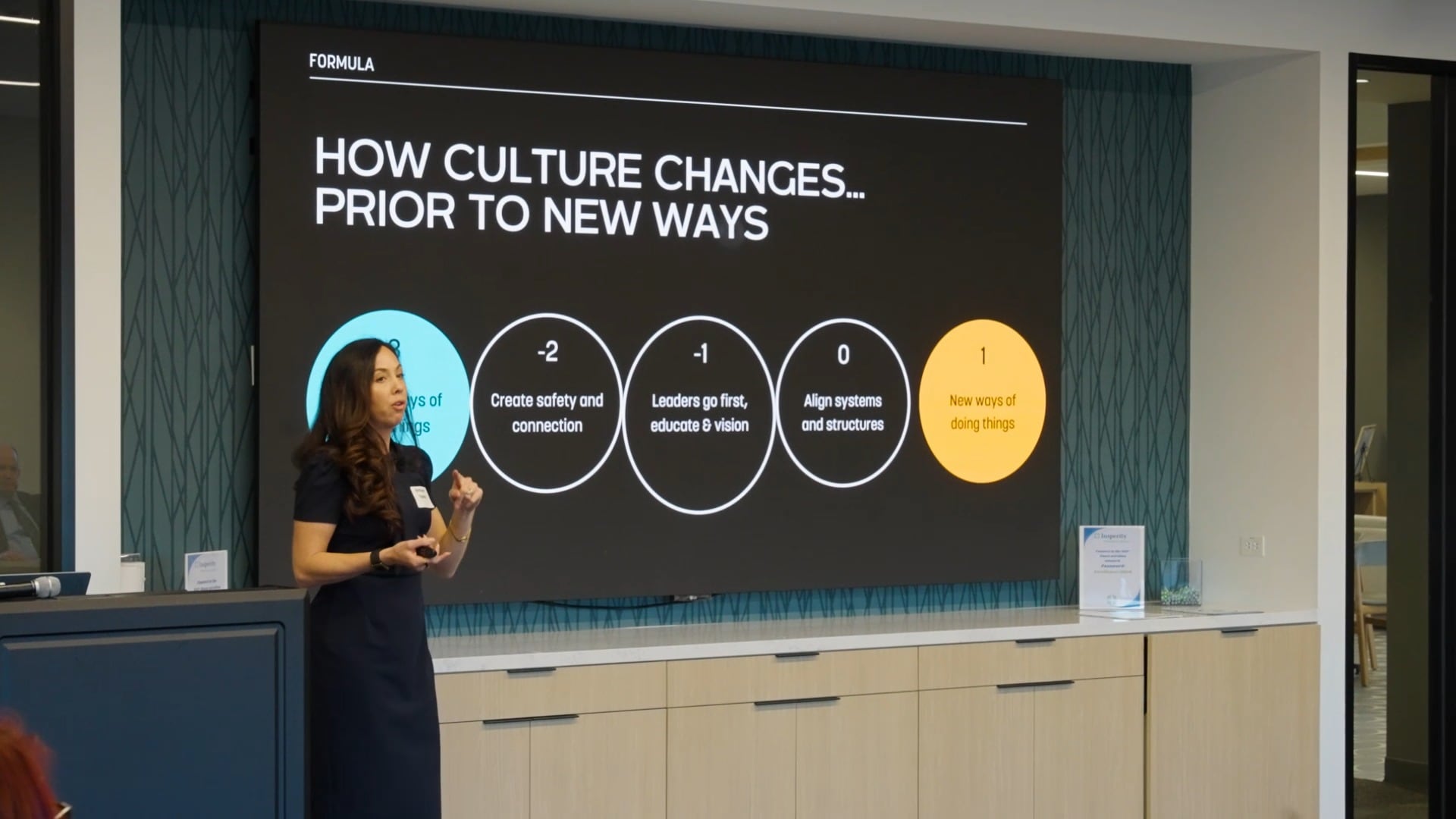
Culture is how people believe they are expected to behave in order to succeed. It either speeds up your strategy or quietly works against it, and it decides how fast decisions get made and how aligned people are around what matters most.
It is the deepest engagement Everest Collective offers, built for executive teams, usually at larger organizations, who want data and lived experience in hand before they decide what to change.
Who it's for
- Executive teams at larger organizations who want to hear from every level, from senior leaders to people in their first week, before deciding what to change.
- Leaders after a merger, reorg or stretch of fast growth, when the culture described in the handbook and the one people experience every day have drifted apart.
- CEOs who sense the culture is working against the strategy and want to know exactly where and why.
How the work runs.
- Format
- Validated quantitative surveys gather anonymous feedback across every level of the organization. Confidential one-on-one interviews add the context numbers cannot capture. We analyze both and present the findings to your executive team.
- Length
- Roughly two to four weeks for surveys and interviews, then one to two weeks for analysis and presentation of findings.
- Who's in the room
- Your people at every level contribute through the surveys and interviews. Your executive team works with us to define the culture the strategy requires and receives the findings.
What you get
- A clear, objective picture of your culture as it exists today
- A defined view of the culture your business strategy requires
- A playbook for your leaders, with a roadmap of which norms help performance, which limit it and what behavior has to shift
- Measurable markers to track progress over time
Culture becomes visible.
Validated surveys show how people across the company behave compared with how leadership assumes they behave. Confidential interviews add the context and candor numbers alone can’t capture. Once culture is visible, your leaders can manage it.
What we measure
- How people believe they must behave to succeed
- The behaviors they believe would create stronger performance
- The impact leadership is having on daily norms
- The gap between your current culture and the culture you want
Who we hear from
- Senior executives and the leaders who report to them
- Managers and individual contributors
- Long-tenured people and recent hires, in their own words
- Every level, anonymously, so people say what they think
Every strategy demands specific behaviors.
Growth, innovation, operational excellence, market leadership and transformation each need a different culture. Once we know the culture you have, we work with your executive team to define the culture your business objectives require, then build the roadmap to get there.
We help you identify
- Which norms are helping performance
- Which norms are quietly limiting progress
- What behaviors have to shift to support your goals
Your roadmap
- Reinforce the behaviors that drive results
- Address the norms that work against them
- Align incentives, communication and expectations
- Track measurable progress over time
Leaders stop guessing about their culture.
The assessment puts the gap between the culture you have and the culture your strategy needs on the table, in your own people's words and numbers, so the executive team can decide what to change based on evidence.
The playbook turns that picture into something your leaders can execute. It names the norms that are helping you hit your goals and the ones quietly working against them, and it spells out the behavior that has to change for the strategy to work.
Because the markers are measurable, you can track whether the culture is moving in the direction the business needs, quarter by quarter.
Leaders come away with a shared language for culture. Blind spots come to the surface, misalignment shows up early, and behavior is tied directly to business performance. The goal is to move people from “I have to” to “I want to.” When that happens, execution gets stronger, trust deepens and momentum builds.
Most organizations start with an executive retreat.
The retreat is the faster, lighter entry point, and it gets the top team clear on the two or three priorities that matter most. An assessment makes sense when leadership wants data from the whole organization before deciding what to change.
The two fit together well. Assessment findings give a retreat a strong foundation, and a retreat is where the executive team can work through the findings together and commit to the priorities they will execute. Each is its own engagement.
See Executive Leadership RetreatsOrganizational Culture Assessment FAQs
What is an organizational culture assessment?
An organizational culture assessment is a structured way to measure how an organization's culture operates day to day, meaning how people believe they must behave to succeed. Everest Collective runs it with validated anonymous surveys and confidential one-on-one interviews at every level, from senior executives to individual contributors.
What is organizational culture?
Organizational culture is the set of shared beliefs, behaviors and norms that shape how people act inside an organization. In practice it's how people believe they are expected to behave in order to succeed, which is often different from what the values statement says. Culture either speeds up your strategy or works against it, and most organizations don't know which until they measure it.
What are the main types of organizational culture?
A widely used model, the Competing Values Framework from Kim Cameron and Robert Quinn, describes four types. Clan cultures prioritize collaboration and developing people. Adhocracy cultures value innovation and risk-taking. Market cultures focus on competition and results, and hierarchy cultures emphasize structure and process. Most organizations are a mix, and what matters is whether the mix fits your strategy.
What does organizational culture look like in practice?
It shows up in how quickly decisions get made, whether leaders invite candid feedback or avoid hard conversations, what happens when a commitment is missed and whether people feel safe raising concerns. These patterns are often invisible to leadership and obvious to everyone else. An assessment surfaces them with data.
How are organizational culture and leadership connected?
Culture shifts when leadership behavior shifts. Leaders shape culture far more than policies or posters do, which is why the assessment shows your executive team the impact its own behavior is having on daily norms, along with a roadmap to align that behavior with your strategy.
How long does an Organizational Culture Assessment take?
Plan on roughly two to four weeks for surveys and interviews, then one to two weeks for analysis and presentation of findings. The exact timeline depends on the size of your organization.
Who takes part?
People at every level, from senior executives to day-one employees, through anonymous surveys. We also hold confidential one-on-one interviews to capture context the survey numbers cannot.
Is the feedback confidential?
Yes. Surveys are anonymous, and interviews are confidential. People speak more candidly to a neutral third party, and that candor is what makes the findings useful.
How is this different from an employee engagement survey?
An engagement survey measures how people feel about working somewhere. The assessment compares how your culture operates with the culture your strategy requires, then hands your leaders a playbook and measurable markers to close that gap.
Is this the right place to start if we want a quick read on our culture?
Probably not. The assessment is a deep, large-scale engagement for an organization ready to understand and change how its culture drives performance. For a faster starting point, an Executive Leadership Retreat is the better fit.
What happens after the assessment?
We work with your executive team to define the culture your business objectives require, name the norms that are helping and the ones holding you back, and build a roadmap your leaders can execute. Support while you execute it, such as executive coaching or leadership development, is available as a separate engagement.
What do you need from us?
Access to your people at every level for surveys and interviews, time from your executive team to define the culture the strategy needs, and a willingness to act on what the data shows.
See where your team stands.
Ten questions across connection, clarity, alignment and execution. You’ll see your greatest opportunity at the end with no email required, then decide if a retreat makes sense.
Built from 40+ years of leading teams inside multi-billion-dollar companies.