Retreats that end in execution.
An Everest executive leadership retreat is a one to three-day, off-site working session for your leadership team, built from a one-on-one with every leader and facilitated by two former executives. Your team leaves with two or three priorities it wrote together and a written plan to execute them.
- Length
- 1 to 3 daysOff-site, after about three weeks of discovery
- Who’s in the room
- Your leadership teamThe CEO or president and direct reports, sometimes the next tier
- Group size
- 8 to 70 leadersEvery one of them interviewed first
- You leave with
- 2 or 3 prioritiesAnd a written readout of the plan to execute them
A great two days. Then Monday.
Most offsites are planned by one senior leader. They open with the numbers and close with a long list of action items. It was a good two days, the plan lives on paper somewhere, and then the team walks back into the office and the day-to-day takes over. Nothing gets executed.
Mike calls it teams “drifting as opposed to rowing together as a team hard and fast.” An Everest retreat is built the other way around. It starts with every leader’s own words, the team writes its own plan, and we keep the priorities simple, clear and executable so they make it into the work.
That’s why the fee is the smallest cost of a retreat. The bigger cost is two days of your leaders’ time spent on the wrong conversation, and the biggest is the year that follows when nothing that mattered gets done.
Connection. Clarity. Alignment.
“We start with connection, we focus on clarity, and we end with alignment.” Brittany Tipton
Connection
Leaders get to know each other as people, then connect to the mission, purpose and vision.
- Stories that go beneath the roles
- Psychological safety, so people say what they think
- Why the organization exists and what it means to each leader
Clarity
An honest look at where the organization is today and where it’s going.
- What’s working and what isn’t
- Why it matters
- What winning looks like, in terms you can measure
Alignment
The team agrees on who owns what and which levers move the business.
- Two or three priorities the team wrote
- An owner and a measure for each
- A plan simple enough to execute on Monday
You name the summit. Your team picks the route.
“This is where we’re going. This is what success looks like. That’s the destination. There’s a couple different routes that we could take. I’d love everybody’s input.” When the ridge line gets steep, everyone remembers they chose the route together.
Mike FromholdCo-founder, Everest Collective
Six steps. One team at the end.
We interview every leader before we write a word of the agenda. Before, during and after the retreat, every step is built around the outcome you define on day one.
Working sessions with you and a one-on-one interview with every leader.
Weeks 1–3A custom agenda built from what we heard. You sign off before anything is set.
Week 3Your team gets to know each other beneath the roles.
Retreat day 1An honest look at what's working and what isn't.
Retreat day 1–2Two or three priorities and a plan the team wrote together.
Retreat day 2A written readout of what we heard, what the team decided and who owns each priority.
After the retreat- 01
Discover
Weeks 1–3We start with the end in mind.
Three to six working sessions with you to define what success looks like right after the retreat and 12 months out.
Then a private 45-minute one-on-one with every leader who will be in the room. In those conversations people tell us the truth: what’s in the way, and their ideas to fix it.
- 02
Design
Week 3No two retreats are the same.
We play back what we heard, then work backwards from the outcome you want and build a custom agenda with you. Every exercise is there to move the team toward that outcome.
You review the agenda and sign off before anything is set. A 30-minute kickoff call with the team two to three days out sets expectations and shares four questions every leader reflects on before arriving.
- 03
Connect
Retreat day 1Don’t stay in the shallow end.
The retreat opens with connection. Leaders get to know each other beneath the roles, then connect to the mission, purpose and vision of the organization. The senior leader goes first, because the depth they share sets the depth for the room.
Once people feel safe, the quality and quantity of what they share goes up, and the team can get to the root cause of what's slowing it down.
- 04
Clarify
Retreat day 1–2An honest look at where you are.
Where are we today? Where are we going? Why does it matter? What does winning look like, in terms the team can measure?
We shift the agenda in real time based on what the team surfaces. A pre-mortem, where the team imagines it missed the goal and names why, often changes the tone of the room.
- 05
Align
Retreat day 2You name the summit. Your team picks the route.
Who owns what, and which levers move the business toward the outcome. Every voice gets heard, introvert or extrovert, and the team co-authors two or three priorities.
Most teams walk in with a laundry list. They walk out with a short list they can take to the board, share with the company and execute.
- 06
Sustain
After the retreatA readout built to execute.
About two to three weeks later you get a single written readout in your brand: what success looks like, the behaviors the team agreed on, the pre-mortem, what’s working and what isn’t, what to start and stop, your priorities and who leads each action. Every idea from the parking lot is in there too.
Teams that want us to stay in the work while they execute can add executive coaching or leadership development as a separate engagement.
“We do our one-on-ones, and then we come back and give you information, the agenda always shifts. It always does.”
Brittany TiptonCo-founder, Everest Collective
Four questions every leader answers.
They go out with the kickoff call. On the first morning each leader answers them out loud, and that’s when people start saying “I didn’t know that about you.”
- What is something about you most people don’t know that has shaped you into the person you are today?
- Think about someone who taught you how to work or lead the right way. Who was it, and what did they do that stuck with you?
- Five years from now, if we are at our best, what does it look like, and what are people saying about us and the way we do our work?
- A year from now we’re not happy with where we are. What happened? What got in our way?
What two days can look like.
Every agenda is built from discovery, so no two are the same. Here’s the shape a two-day leadership retreat often takes: connection first, then an honest look at the business, then the plan.
Connection and clarity
- Breakfast
- Welcome and purpose. The senior leader shares the vision.
- Connection. Every leader answers the four reflection questions.
- What we heard. Themes from the one-on-ones, shared without pointing fingers.
- What leadership looks like here
- Lunch
- What’s working and what isn’t. Start, stop, keep.
- Where we want to be in three to five years, and the values that get us there
- Wrap-up. One thing that stood out today.
- Team dinner
Alignment and execution
- Breakfast
- What matters most. The top three priorities.
- Who owns what. Roles, ownership and where support is needed.
- Pre-mortem. A year from now we missed the goal. What happened?
- Building the action plan. What changes first, and who leads it.
- Commitments. What each leader will own over the next 90 days.
- Closing, then lunch together
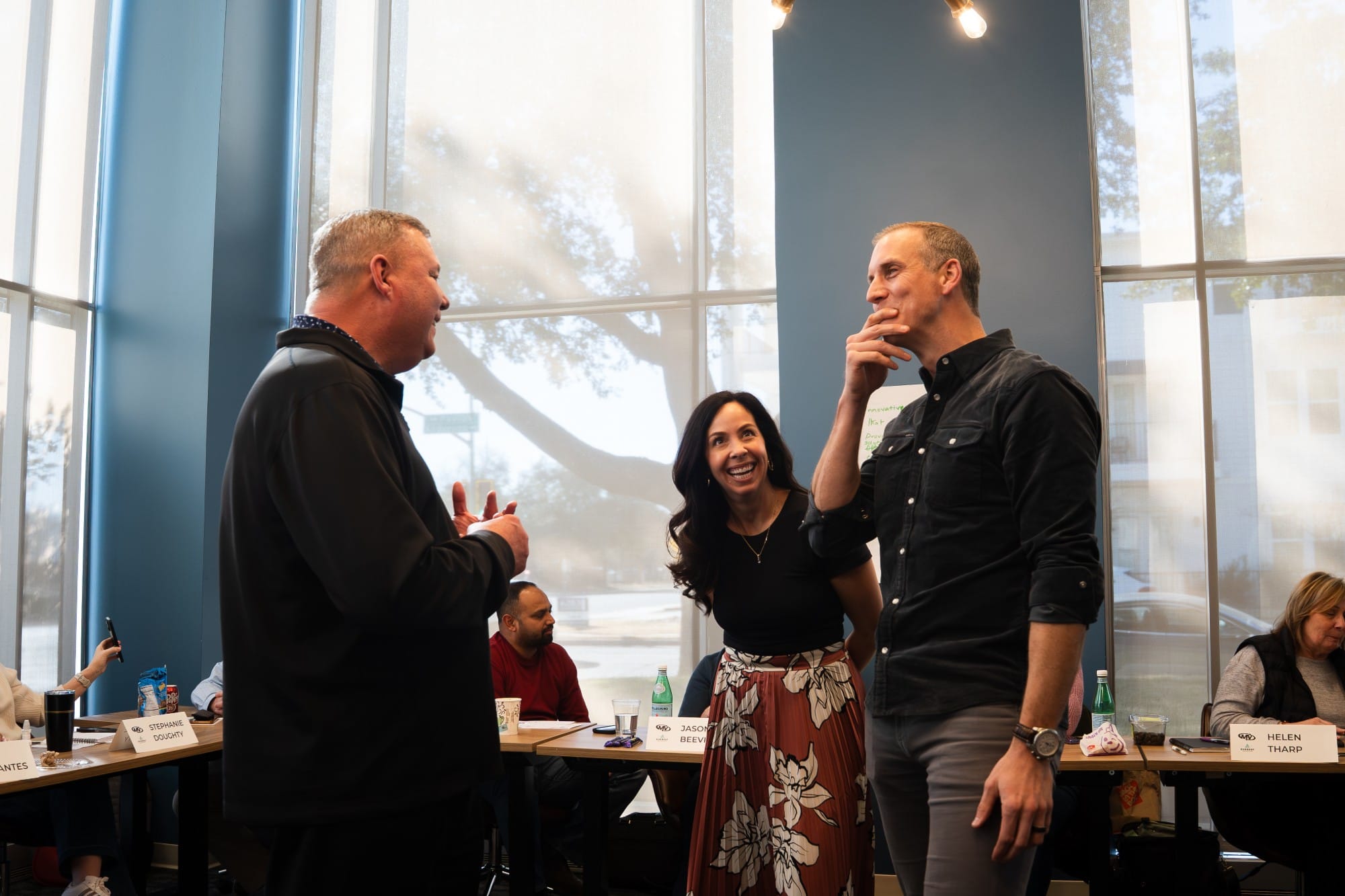
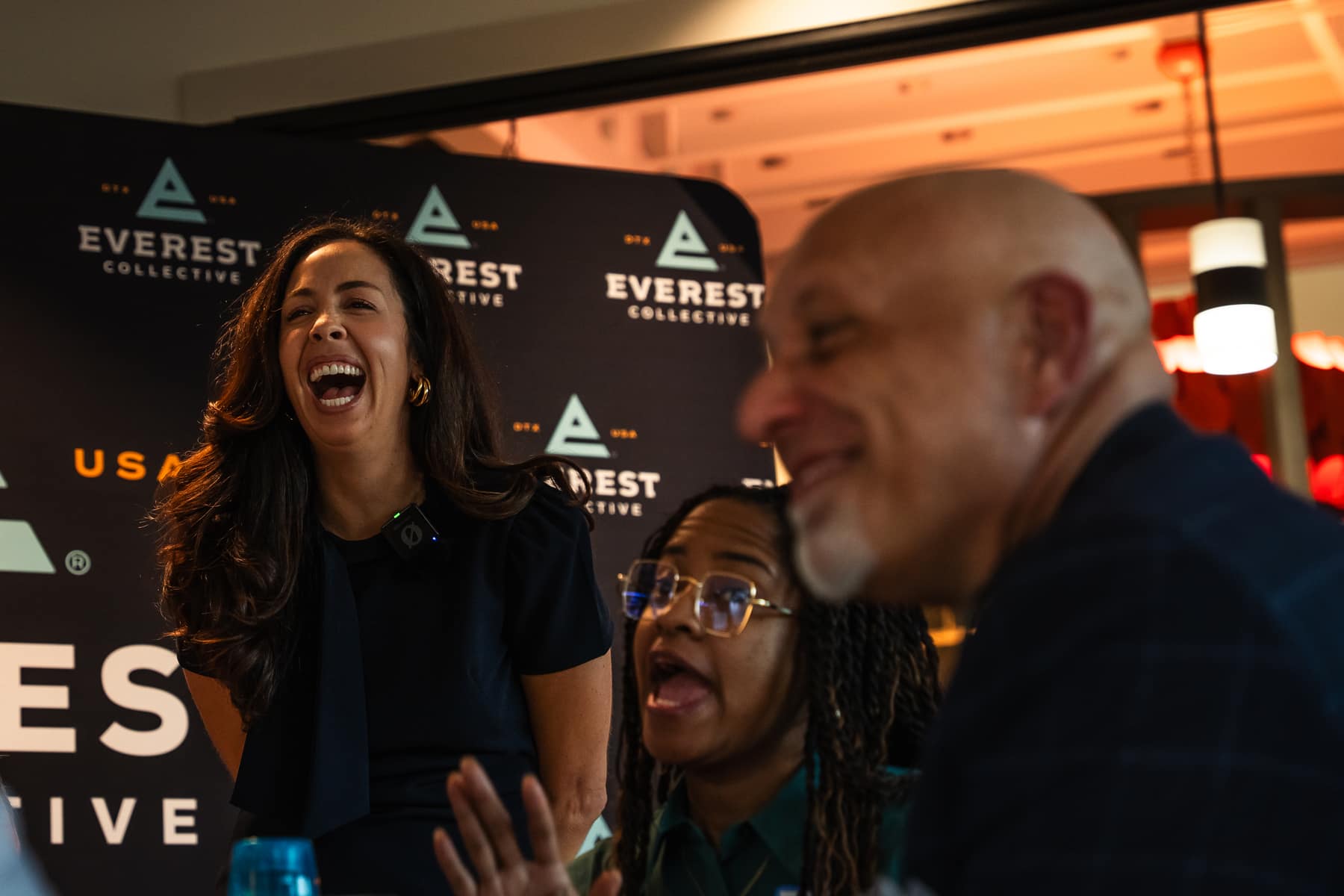
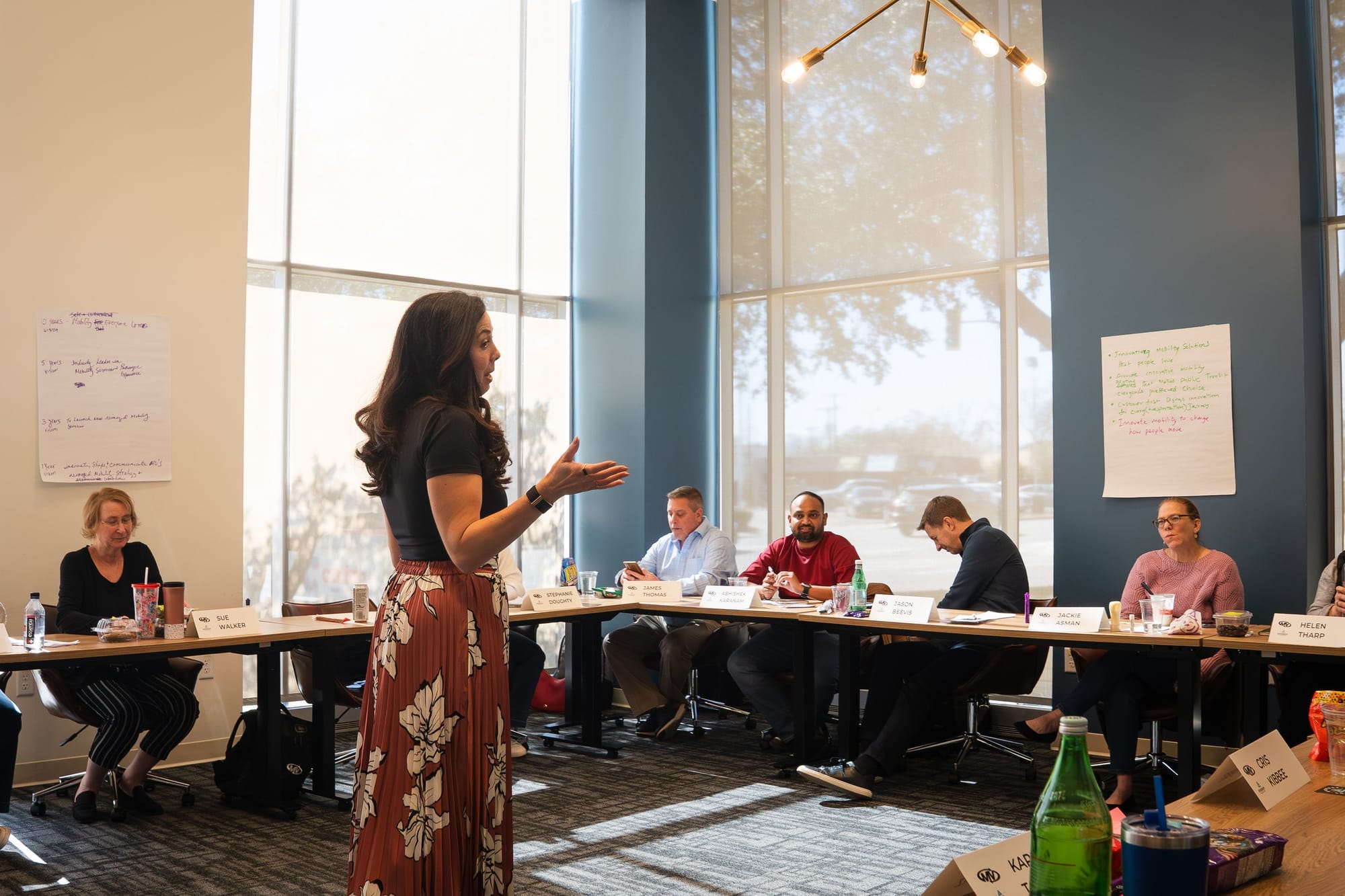
People stop performing and start talking.
“I thought I knew you.”
On a team that had worked together for more than a decade, one executive said partway through that he had walked in thinking he knew about 80 percent of the people in the room.
“I realized I don’t know any of you.”
The mask comes off
“There is always just a levity that is brought to the room, and people take off the mask, and you just feel an instant connection.”Brittany Tipton
The pre-mortem
The team imagines it missed its biggest goal and names why. It often changes the tone of the room, and the team decides how it will show up differently. As Brittany puts it, talk to people, not about people.
Never rebuild the walls
At the end of two days with a 15-person steel manufacturing team, one leader asked the group never to rebuild the walls they had worked so hard to tear down. Then came the hugs, from people who had worked side by side for years.
The parking lot promise
When a great idea pulls the room off course, we capture it and bring the team back to what matters most. Nothing gets lost. Every idea lands in your readout.
A tech-free zone
“I’m currently in a technology-free zone rediscovering what eye contact feels like.”Brittany Tipton’s out-of-office message on retreat day
Strategy is hard work, so we pair it with time outside the room: ranch activities, hiking, shooting, fireside conversations and dinners the team remembers.
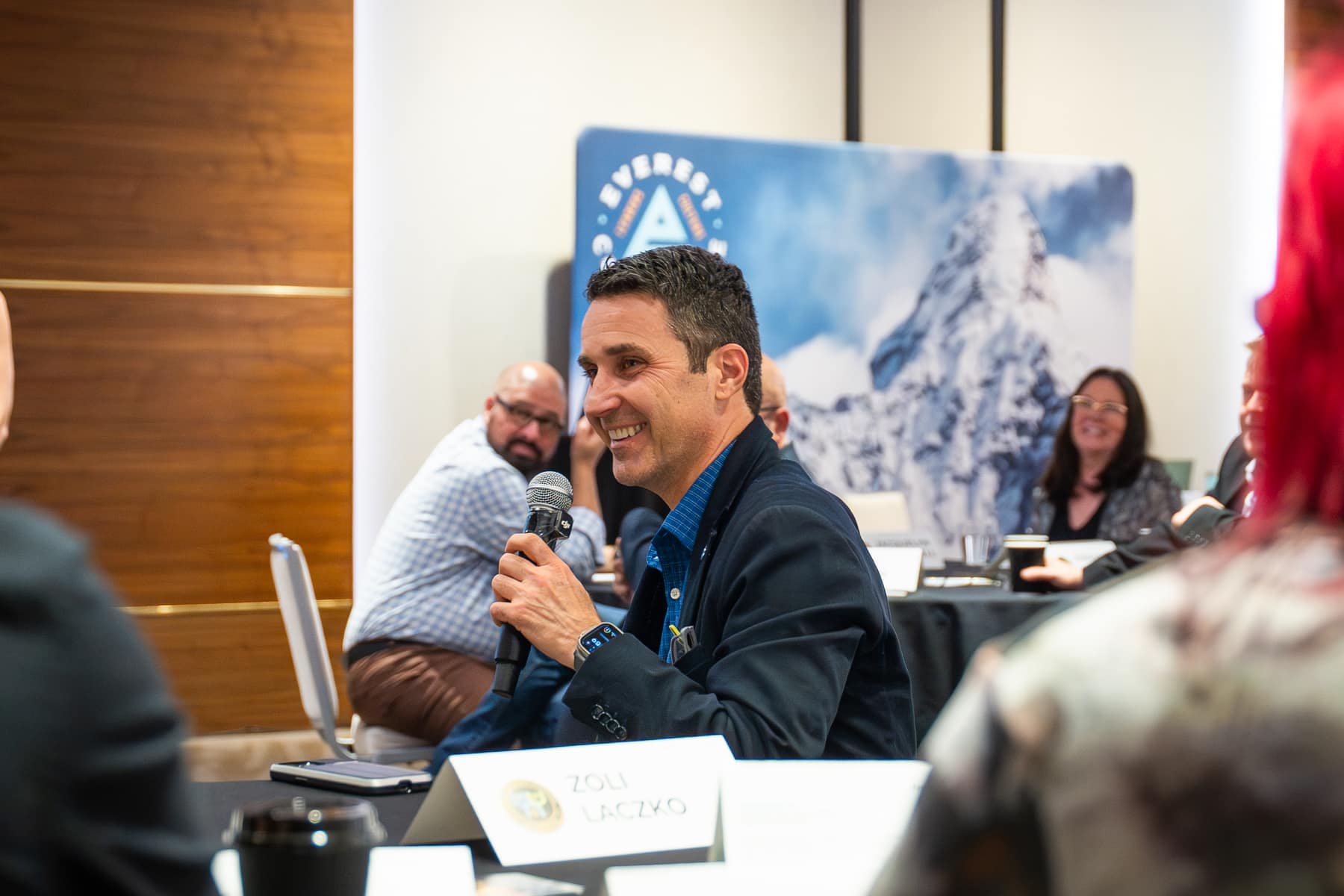
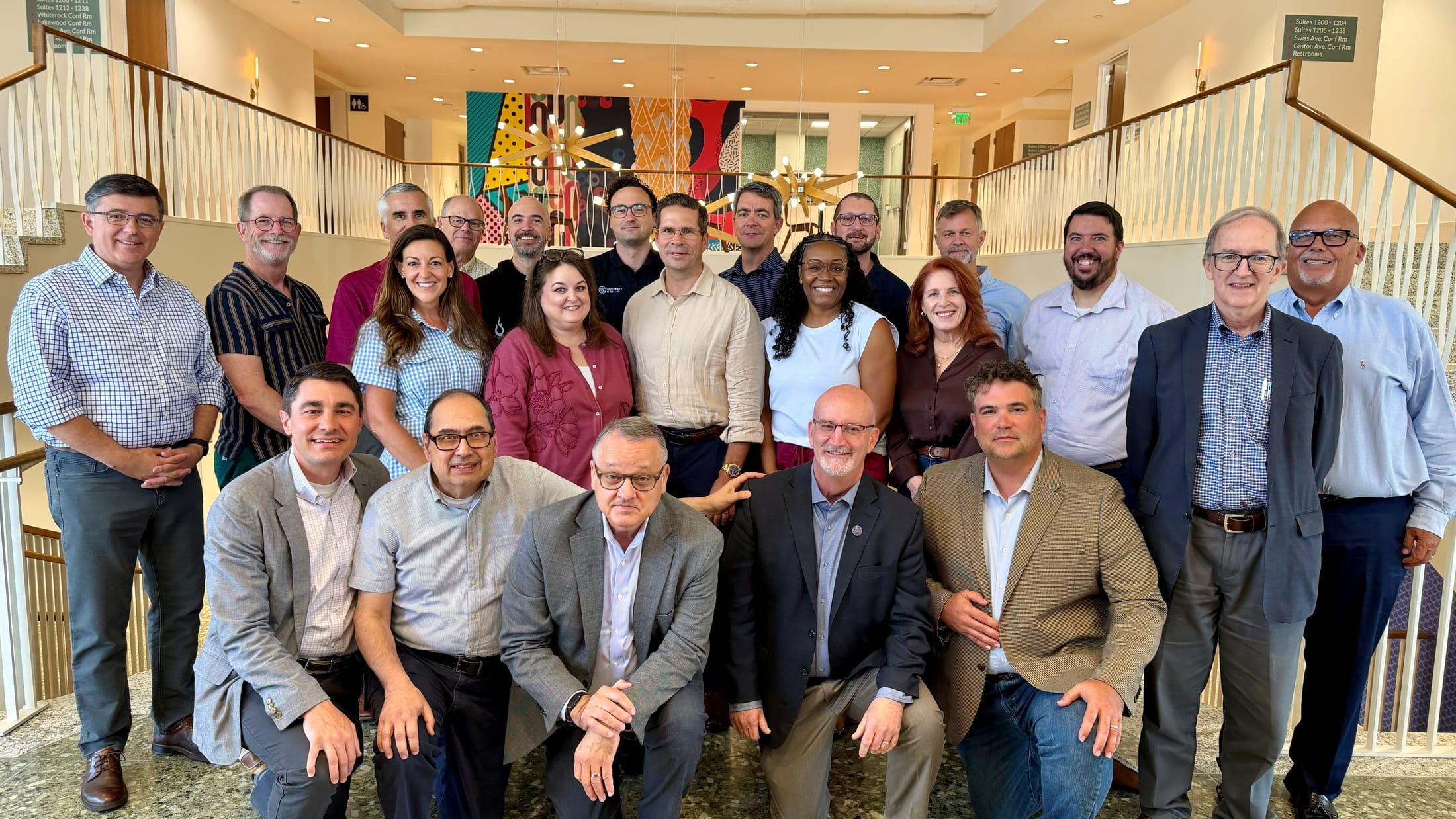
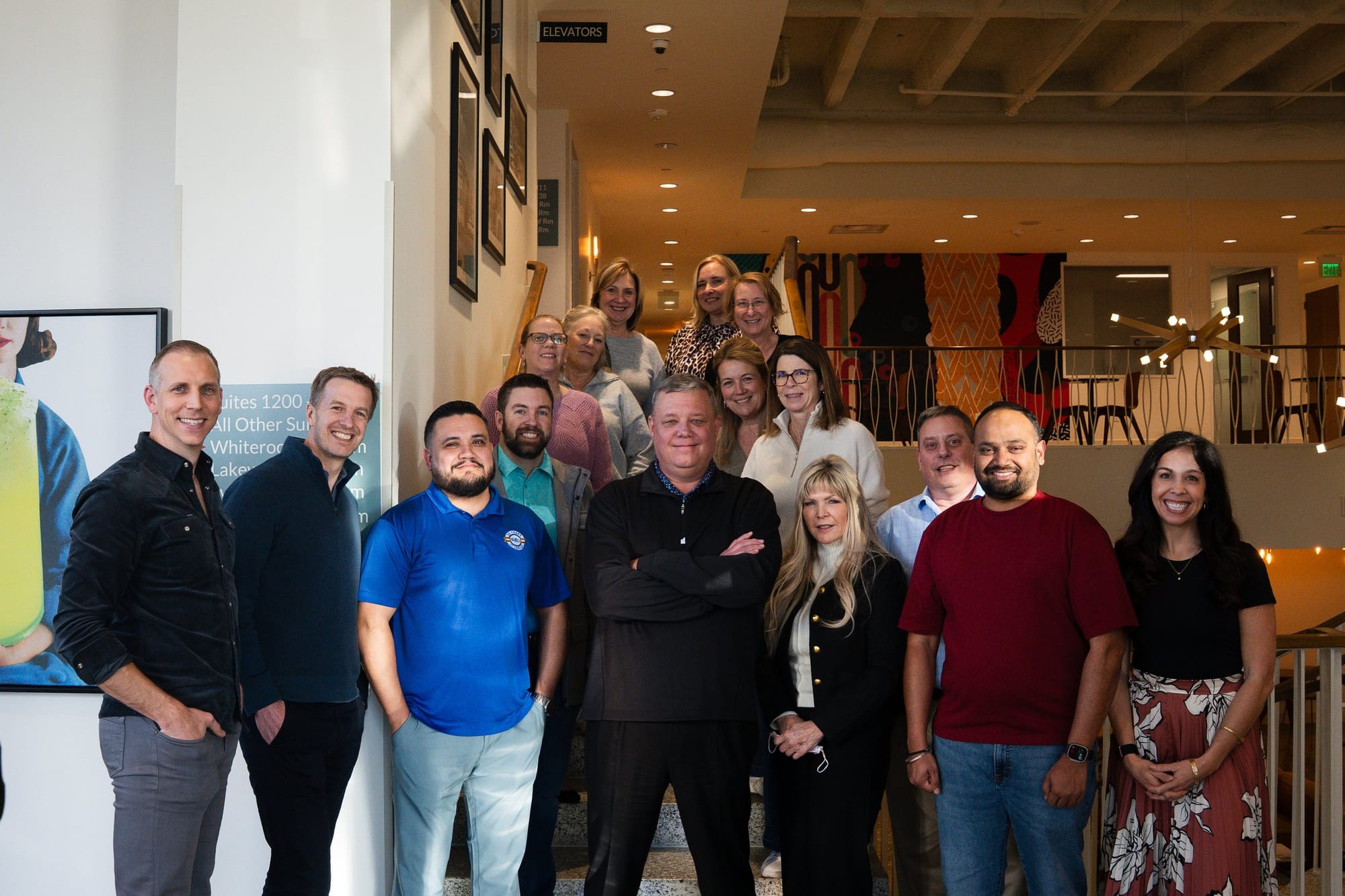
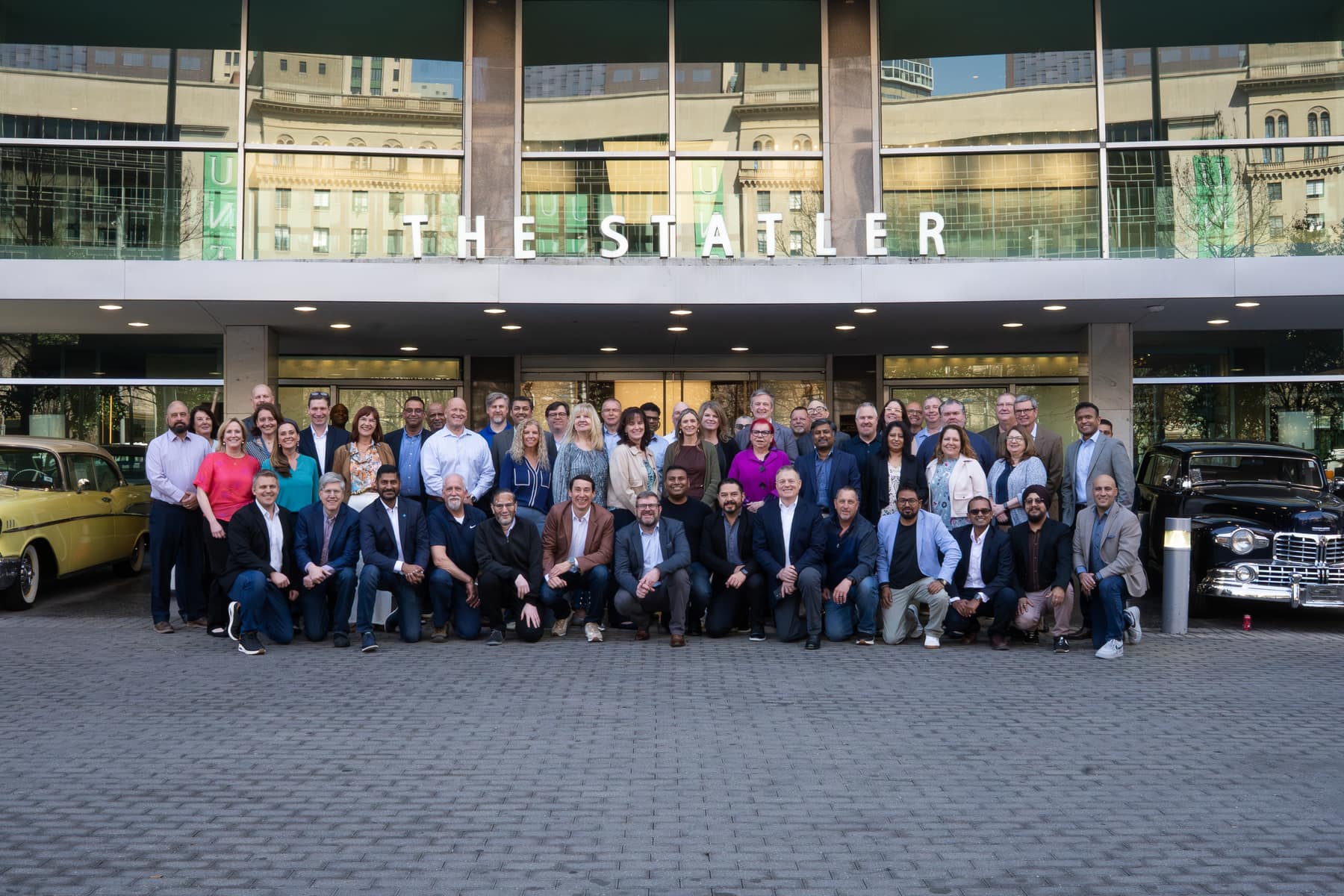
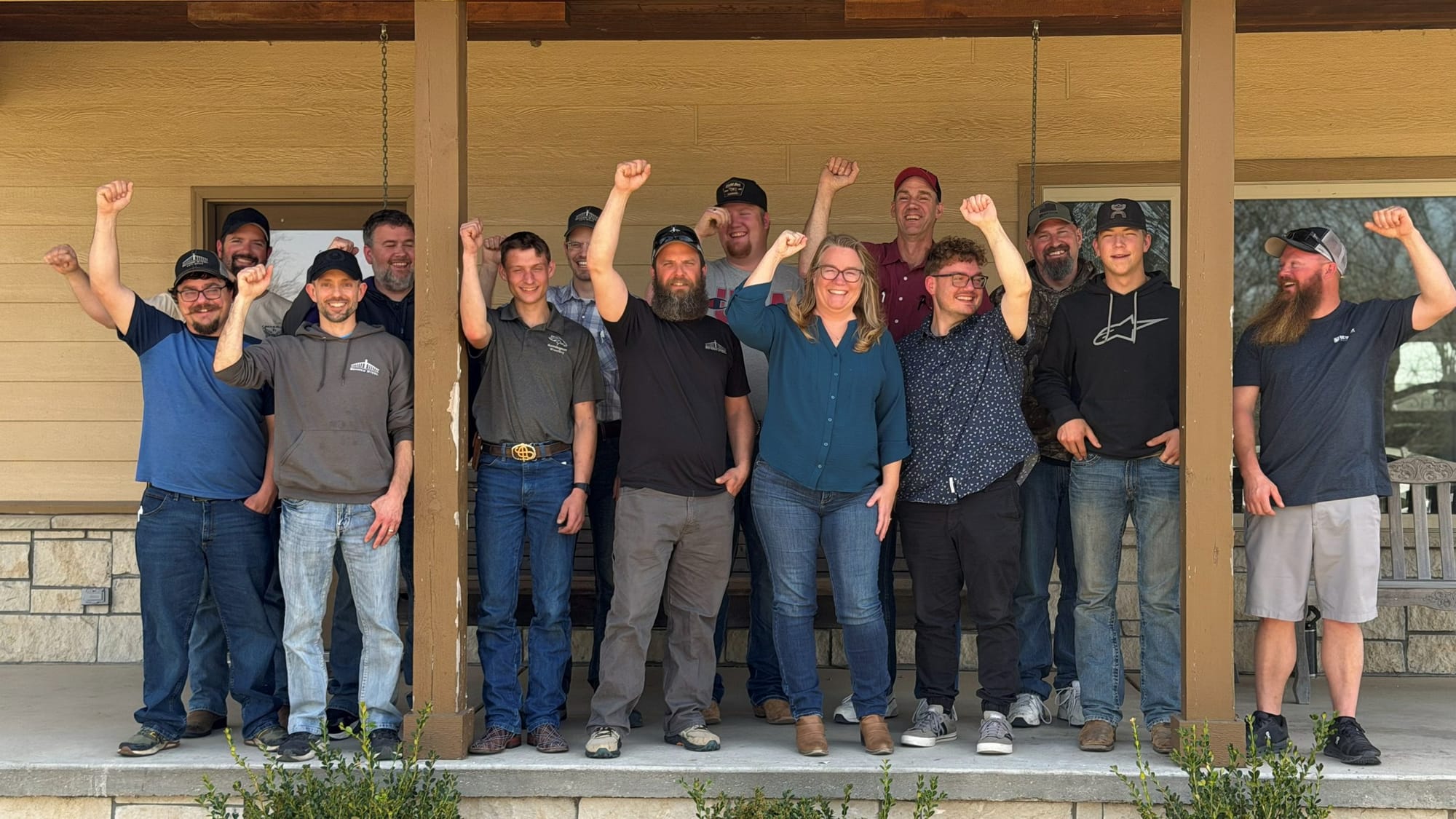
Whole leadership teams, on the same page.
A few of the teams we’ve taken off-site, photographed on the last day.
“We want you to be a participant.”
It’s hard to lead the conversation and take part in it at the same time. When we run the room, every leader, you included, gets to listen, think and speak. And people tell a neutral third party what they won’t say in front of their boss.
Brittany TiptonCo-founder, Everest Collective

Every retreat is facilitated by Mike Fromhold, a former CEO, and Brittany Tipton, a former EVP. Meet Mike and Brittany
Pause the fix-it impulse
Explore the problem before anyone jumps to solving it.
Embrace healthy friction
Honest disagreement stress-tests the strategy.
Map, don’t lobby
Listen for perspective, not agreement.
The parking lot promise
Capture every detour without losing focus.
Every retreat includes
Everything from the first working session to the written readout. You bring the team. We handle the rest.
- Three to six working sessions with you to define what success looks like
- A one-on-one interview with every leader on the team
- A custom agenda you review and sign off on
- A 30-minute team kickoff call two to three days before the retreat
- One to three days of facilitation through connection, clarity and alignment
- Facilitation and workbooks, plus the venue and logistics if you choose full service
- A single written readout two to three weeks after the retreat, with each priority, who leads it and how you’ll measure it
We run all of it, or just the part that changes the team.
Full-service retreat
We design and facilitate the retreat and handle the logistics: the venue, rooms, meals, invitations and schedule. We find the venue and manage the budget for you.
Best if you want your time back and one team owning the whole event.
Facilitation only
You’ve booked the venue and the travel. We interview every leader, design the agenda, facilitate the days and write the readout.
Best if the logistics are covered and you need the part that changes how the team works.
Where most plans stall, we can stay in the work.
The readout gives your team a plan it can execute on its own. Many teams ask us to stay in the work with them while they do. That’s a separate engagement, shaped around what your team needs.
One of our first clients met with us a month after their retreat and none of the priorities had moved. We found time in their week for the work. A month later, every one of them was green.
“We’re sitting in on meetings, we’re listening. We’re saying, okay, if you are trying to get this message, what’s the language you want to use?”Brittany Tipton, on in-the-work coaching
Leaders ready to get their team rowing together.
- CEOs, presidents and executive directors with a leadership team of 8 to 70 people
- Teams that have grown fast and stopped knowing each other the way they used to
- Organizations with a new strategy, a new leader or a hard challenge that needs the whole team behind it
- Companies in the middle of an AI transformation that need the leadership team aligned on where AI fits
- Leaders who want a plan the team owns and can execute
In their words.
“My response is going to be the same. Give Mike and Brittany a call.”
“Brittany and Mike actually knew what the problems were from behind the curtain, because they had talked to everyone individually.”
“Mike and Brittany take a highly personalized approach, and I never felt like I was a customer.”
“This time was extremely well spent because the team is focused on the work that needs to be accomplished and eager to achieve our goals together.”
“It was really a wonderful experience, including the preparatory work and the individual interviews ahead of the retreat.”
The straight answers.
Anything else, call us at (214) 603-9942. A person picks up.
What is an executive leadership retreat?
An executive leadership retreat is a one to three-day, off-site working session where a leadership team steps out of the day-to-day to connect, get clear on where the organization is going and agree on the few priorities that matter most. An Everest retreat is built from a one-on-one interview with every leader and ends with a written readout of the plan to execute them.
What is the Everest Climb?
The Everest Climb is how every Everest engagement runs, in six steps: Discover, Design, Connect, Clarify, Align and Sustain. It starts with a one-on-one interview with every leader, because we interview every leader before we write a word of the agenda, and it ends with a written readout of the plan to execute. When the work is about AI, the same climb runs through five layers, from culture at base camp to value at the summit.
How long is an Everest executive leadership retreat?
The retreat itself runs one to three days, depending on the size of the team and what it needs to accomplish. Before that, discovery runs for about three weeks, with working sessions with the executive and a one-on-one interview with every leader on the team.
How big a team do you work with?
Our retreats are built for leadership teams of roughly 8 to 70 people. We have run retreats for a 15-person company where everyone worked in the same building and for a 60-person leadership team, and the discovery process scales to fit both.
Where are retreats held?
Retreats are held in person, away from the office, so leaders can step out of the day-to-day and think. Everest is based in Dallas–Fort Worth and most retreats take place in the Metroplex, and we also work with teams across the United States. We handle the logistics and hospitality and help you choose a venue that fits the group.
Who facilitates the retreat?
Everest's co-founders, Mike Fromhold and Brittany Tipton, facilitate every retreat together. Mike is a former CEO who spent 15 years rising to senior executive at a multi-billion-dollar company, and Brittany is a former EVP who built the culture consulting arm of a multi-billion-dollar business.
What are the one-on-one interviews?
Before we set a single agenda item, we hold a private conversation with every leader who will be in the room. We ask each person what success looks like to them and what is and isn't working. Because we are a neutral third party, people tell us things they would not say in front of their peers or their boss, and those themes shape the agenda.
What happens after the retreat?
You receive a single written readout that captures the two or three priorities your team wrote and the plan to execute them, and that readout is where the retreat engagement ends. Teams that want us to stay in the work while they execute can add executive coaching or leadership development as a separate engagement.
How is this different from a typical leadership offsite?
Most offsites are planned by one senior leader, start with the numbers and end with a long list of action items that fade within a few weeks. An Everest retreat starts with a one-on-one interview with every leader, is run by neutral facilitators so the whole team can take part, and moves through connection, clarity and alignment. The team leaves with two or three priorities it wrote itself, simple and specific enough to execute.
Why not run the retreat ourselves?
It is hard to facilitate and take part at the same time. When the executive runs the room, they are watching the clock and running exercises instead of listening, and the team tends to follow their lead. A neutral facilitator lets every leader, the executive included, participate fully. And the bigger cost of a do-it-yourself offsite is rarely the two days. It’s the year after, when the priorities never get executed.
Can a retreat cover AI?
Yes. Many leadership teams use part of the retreat to agree on where AI fits in their priorities: which problems it should solve first, who owns each effort and how progress gets measured. AI is a tool, the same way culture and leadership are, and it works best when the executive team leads it together.
How far in advance should we plan a retreat?
Plan on about eight weeks from the first conversation to retreat day. That leaves room for discovery, the one-on-one interviews and agenda sign-off. It also helps to avoid quarter-end, board weeks and holidays when you pick the date.
What industries do you work with?
The work fits any industry. We have worked with teams in professional services, technology, construction, healthcare, education, telecom, nonprofit, manufacturing, transportation and staffing. Because every retreat is built from discovery, the agenda reflects your business.
What if some of our leaders are skeptical?
That is common, and it is fine. The one-on-one interviews and the connection phase are designed to bring guarded people in, and a neutral facilitator gives them room to speak up without the usual dynamics with a colleague or boss.
Not sure where to start? See where your team stands.
Ten questions across connection, clarity, alignment and execution. You’ll see your greatest opportunity at the end with no email required, then decide if a retreat makes sense.
Built from 40+ years of leading teams inside multi-billion-dollar companies.