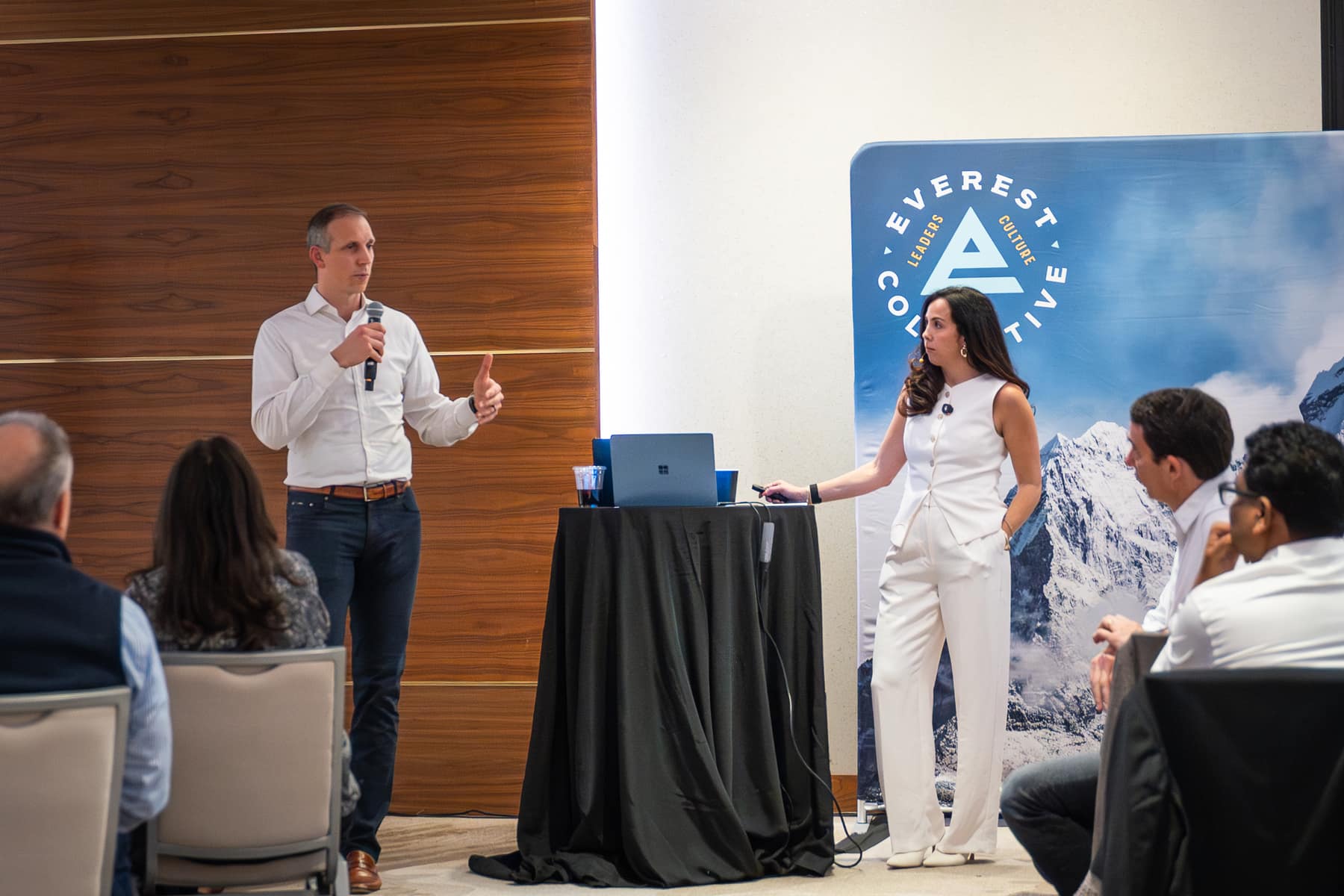


On retreat days, my out-of-office message says I'm in a technology-free zone rediscovering what eye contact feels like. I mean it. Some conversations only happen when the laptops are closed.
So it may sound strange that I spend so much time helping leadership teams bring AI into their companies. It makes sense once you see where AI efforts get stuck. The technology usually works. What stalls is the people side: trust, fear, permission and habit. That is culture work, and culture work is what I do.
Culture is base camp
When we map AI for a company, culture sits at the bottom of the climb, at base camp. It holds everything above it up. The question there is simple: what must people believe and experience for any of this to work?
If people believe AI is coming for their jobs, they will attend the training, nod at the demo and keep doing the work the old way. If they believe it will make their work better and their leaders will be honest with them, they will find uses nobody in the executive team imagined.
Five things leaders can do
1. Go first, out loud. Use the tools yourself and talk about it. Share the prompt that saved you an hour and the one that gave you nonsense. When leaders experiment in the open, everyone else gets permission.
2. Be honest about roles. Silence fills with the worst story. Tell people what you know about how roles will change, what you don't know yet and how you will make those decisions together.
3. Make it safe to try and fail. People need room to experiment on real work without being judged for a bad first attempt. Create a place to share what didn't work as well as what did.
4. Give clear guardrails. Confidence grows when people know the rules: which tools are approved, what data can go where and when a person must review the output. Clear limits make it easier to say yes.
5. Celebrate the time it gives back. When someone frees up five hours a week, tell that story by name, and show where those hours went: to customers, to coaching, to the work only people can do.
Make the promise to your people
The leaders who get this right make a promise to their people about how AI will be used and how they will be treated as the work changes, and then they keep it. We call that work the Promise to Your People, and it is the deliverable at base camp of our AI and leadership work.
To see how ready your culture is, start with an organizational culture assessment, or take the free AI Readiness Check.
Frequently asked questions
Why don't employees adopt AI tools?
Usually because of culture: fear for their roles, uncertainty about the rules and no permission to experiment. The technology often works fine.
How can leaders encourage AI adoption?
Use the tools openly, be honest about what AI means for roles, make it safe to experiment, set clear guardrails and celebrate the time AI gives back.
What role does culture play in AI transformation?
Culture is the base everything else rests on. If people do not trust how AI will be used or how they will be treated, they will work around the tools no matter how good they are.
Related service: AI and leadership