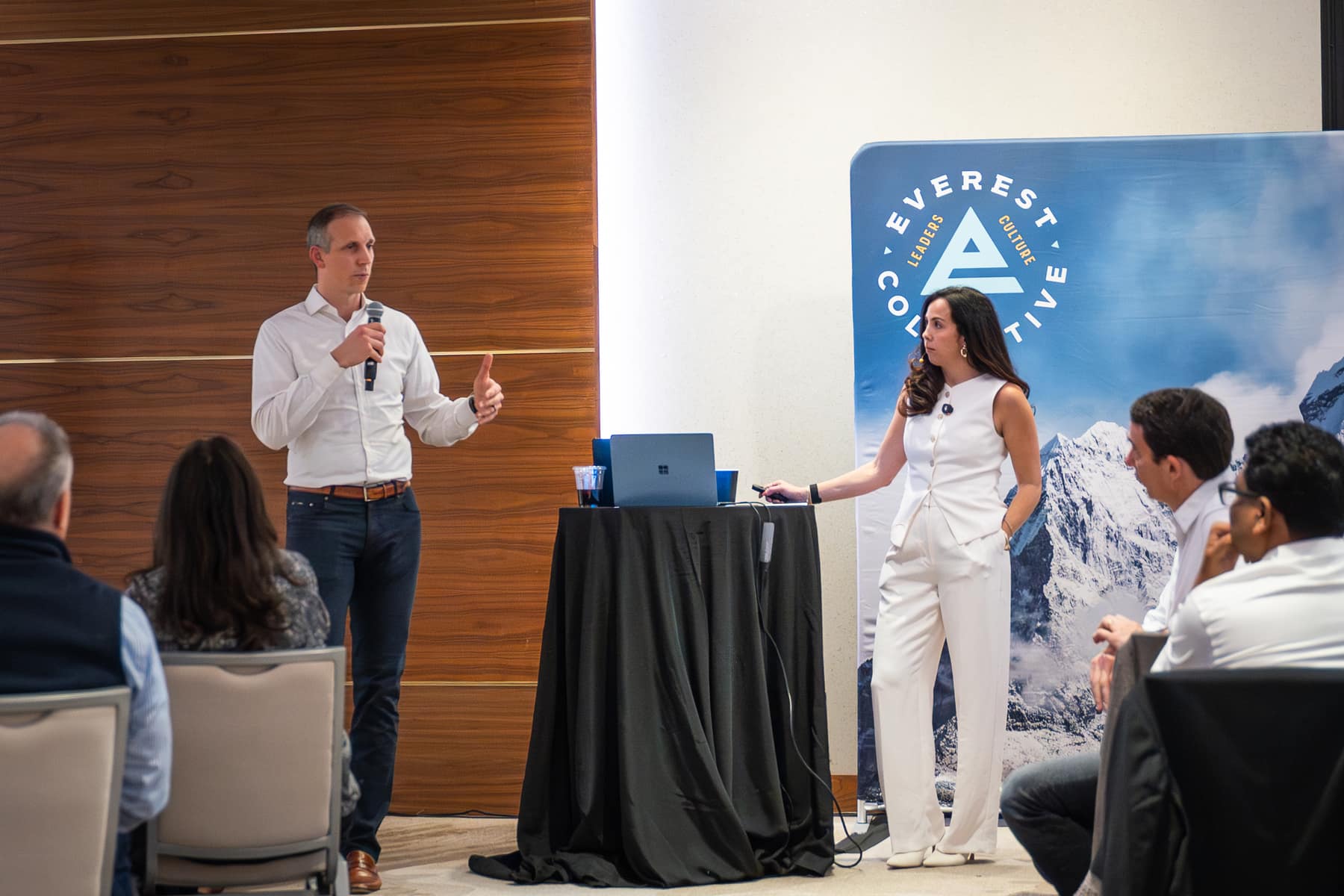


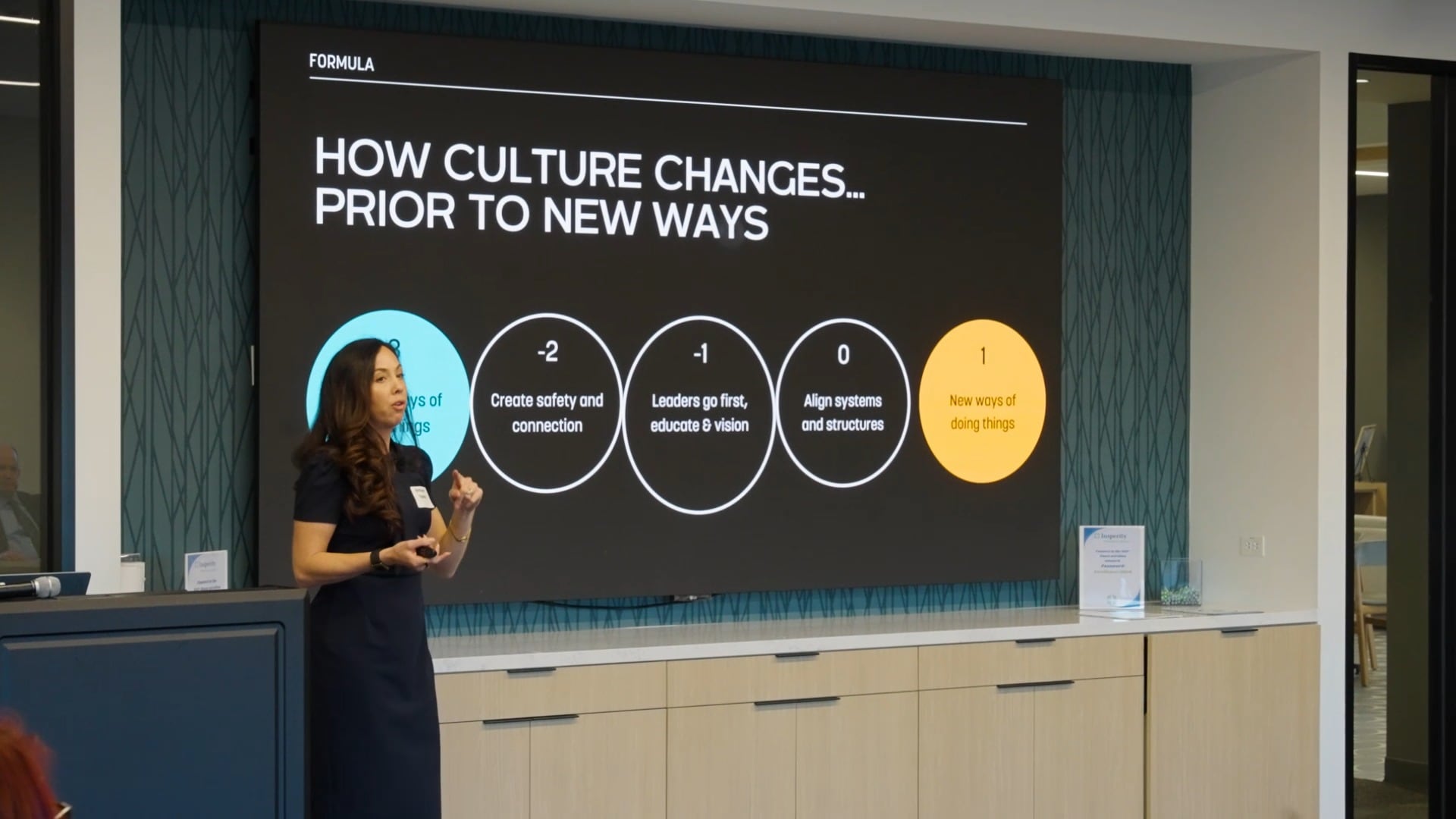
On January 21, Brittany stood in front of a room of Dallas–Fort Worth executives at The Collective with one slide behind her. Across the top it said "How culture changes, prior to new ways." Below it, five circles ran from left to right: current ways of doing things, create safety and connection, leaders go first, align systems and structures, and finally, new ways of doing things.
Nobody in that room needed a definition of culture. What they needed was the order of operations, and the reminder that the third circle, leaders go first, is where most culture efforts quietly stop.
That is the bar we hold every keynote to. People should leave knowing what they will do differently, starting with themselves.
Start with what the audience will do on Monday
Before we write a word of a talk, we ask the person booking it one question: what do you want your people doing differently a month from now? A kickoff that needs a sales team to trust its new leaders needs a different talk than a conference full of CEOs wrestling with AI.
The answer shapes everything else. It decides which stories we tell, which idea gets the most time and what we ask the room to commit to at the end.
One idea, carried all the way through
The easiest keynote to forget is the one that covers everything. Ten frameworks in forty-five minutes feels generous in the moment and leaves nothing behind.
A keynote worth the hour picks one idea and carries it all the way through: what it is, why it matters to this audience, what it looks like when it goes wrong and what it looks like when it works. If the room can repeat the idea in one sentence on the drive home, it landed.
Stories from people who lived it
Senior leaders size up a speaker in the first few minutes. They are listening for whether the person on stage has carried the kind of responsibility they carry.
Our talks come from our own seats. Mike spent fifteen years rising from an entry-level role to senior executive at a multi-billion-dollar company, then served as a CEO, and he led an executive team through COVID that grew while its markets in Los Angeles, New York and Washington, D.C. were in crisis. Brittany ran more than $200 million in national accounts and built a culture consulting practice inside a multi-billion-dollar business. When we talk about trust, accountability or leading through a hard season, we tell the story of the time it worked and the time it broke.
End with commitments the room writes
Applause is a poor measure of a keynote. A better one is how many people wrote something down that they intend to do.
We close every keynote with a few minutes for exactly that: each person names one thing they will start, stop or do differently, and shares it with the person next to them. It takes five minutes, and it turns an idea people liked into something they intend to do.
When a keynote should lead into more
A keynote can start a change in how people lead. Making it stick takes practice. When an organization wants the idea to become a habit, we pair the talk with a facilitated working session the same day, or follow it with a series of sessions across the year.
Bring us to your event
We speak to company kickoffs, leadership offsites, associations and conferences on building a culture that delivers results: purpose, vision and values, trust, accountability and growing leaders. See the topics and formats on our keynote speaking page, or book a conversation about your event.
Frequently asked questions
How long should a leadership keynote be?
Thirty to sixty minutes for one idea told well. When the goal is a change in how people work, add a facilitated working session after the talk so the room can apply the idea to its own team.
Can a keynote change a company's culture?
A keynote can start the change by giving people a shared idea and a first commitment. Culture changes when leaders go first and the habits get practiced, which is why we often pair a keynote with working sessions or a leadership series.
What topics do Everest keynotes cover?
How to build an organizational culture that delivers results: a clear purpose, mission and vision, values that show up in behavior, trust and candor, accountability, growing leaders and leading through hard seasons.
Related service: Keynote Speaking