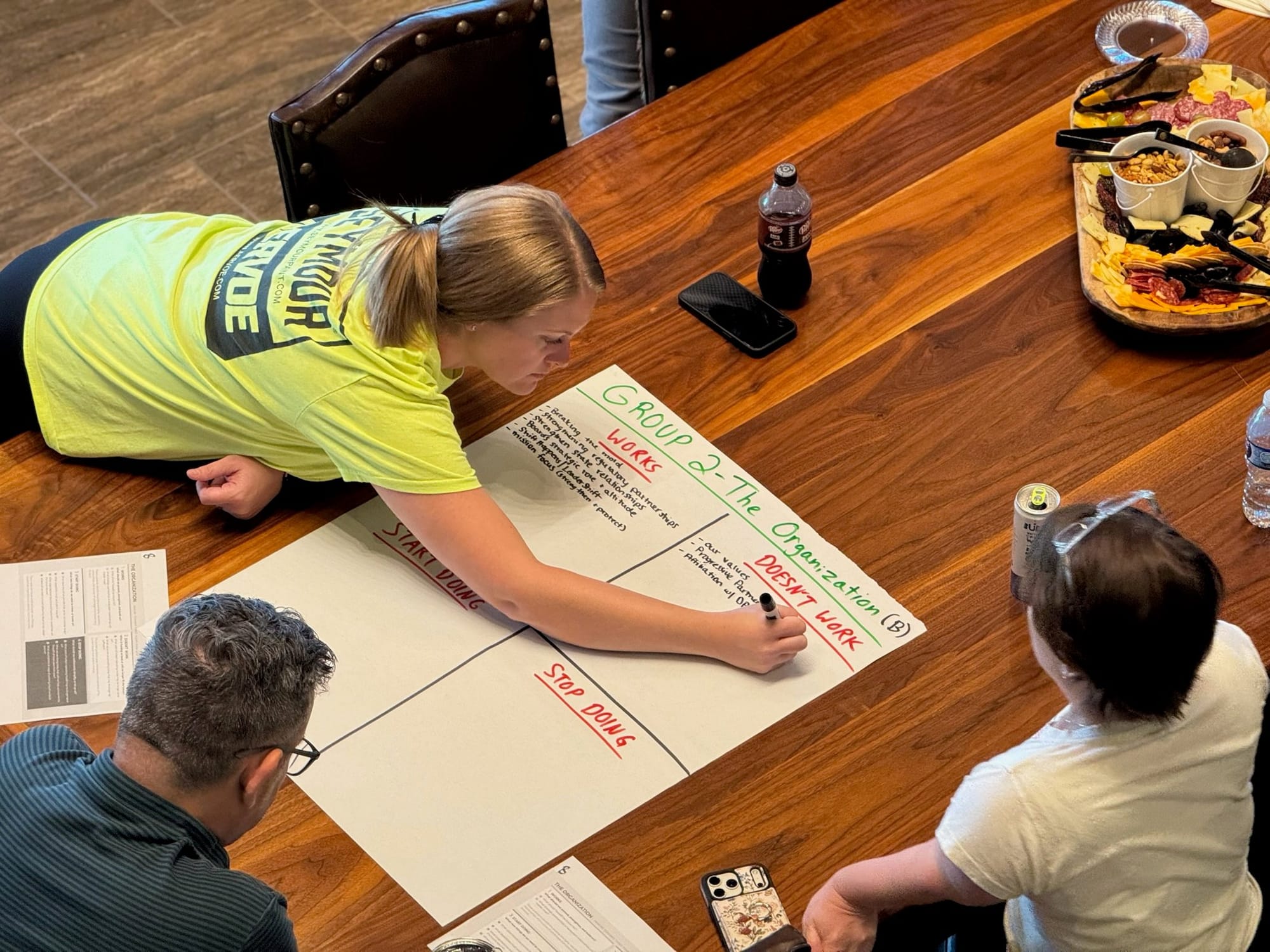

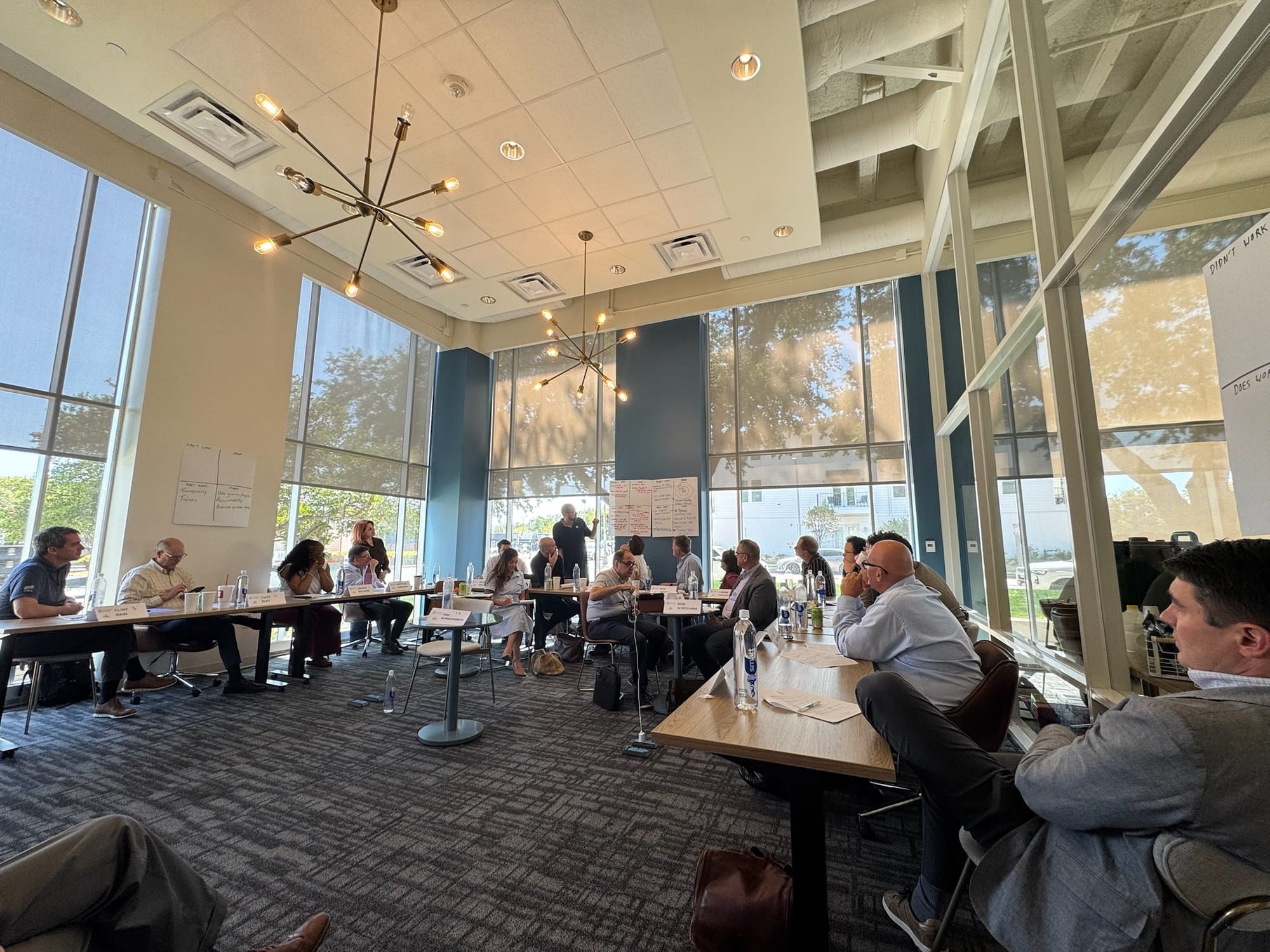
The University of Dallas cabinet left its first retreat with three shared priorities and the measures to track them. That was the easy part. The hard part started the following Monday, when every member of the cabinet walked back into a full calendar and an inbox that had kept filling while they were away.
What happened next is why that retreat mattered. The three priorities now lead every cabinet meeting, and advancement had its best philanthropy year in 26 years. The plan survived because someone stayed in the work with the cabinet after the retreat ended.
I have watched the other version play out more times than I can count, first as an executive sitting in those offsites and now as the person facilitating them.
The two-week window
Commitments made at a retreat fade fast when nothing reinforces them. In our experience the window is about two weeks. By then, the urgent work has crowded back in, the energy from the room has worn off and the plan lives in a document nobody opens.
Teams rarely decide to abandon their priorities. They drift away from them a meeting at a time, which is why I describe it as drifting apart when the team should be rowing together, hard and fast.
Why priorities stall
The reasons are predictable, and almost none of them are about effort.
The inbox wins. The priorities the team chose are important and rarely urgent. Without a deliberate structure, urgent work takes every open hour.
Ownership blurs. "The team" owns the priority, which means no single person wakes up responsible for it.
Progress has no home. If the priorities never appear in the meetings the team already holds, they quietly drop off the agenda.
The CEO becomes the bottleneck. Decisions that should be made two levels down keep landing on the top leader's desk, and the priorities wait behind them.
What keeps them moving
What works is a simple rhythm that keeps the plan inside the real work.
First, every priority gets one owner by name and one or two measures the team can see each week. Second, the priorities lead the agenda of the team's existing meeting, before anything else gets discussed. Third, the top leader gets support while making the real decisions that move the plan, which is where coaching comes in.
What executive coaching adds
Executive coaching is one-on-one work with the CEO or a senior leader inside their real decisions and conversations. It is the way we stay in the work after a retreat. A coach who was in the room knows what the team decided and why, so every session reinforces choices the team already made.
In practice that means preparing for the hard conversation with a peer who missed a commitment, deciding which decisions to push down, and noticing early when a priority is starting to slide.
Start with a plan worth keeping
A plan only matters if it gets executed. If your team is heading into an offsite, start with the retreat planning guide. If the offsite already happened and the plan is fading, book a conversation and we will help you pick it back up.
Frequently asked questions
How long do retreat commitments last without follow-up?
In our experience, about two weeks. After that, urgent work crowds back in and the plan stops showing up in the team's meetings unless something reinforces it.
What does an executive coach do after a retreat?
Works one on one with the CEO or senior leader inside their real decisions: preparing for hard conversations, pushing decisions down, keeping the priorities on the agenda and spotting early when one starts to slide.
Is coaching included in an Everest retreat?
Every retreat includes a single written readout of what the team decided and who owns each priority. Executive coaching is available as a separate engagement for leaders who want support executing the plan.
Related service: Executive Coaching